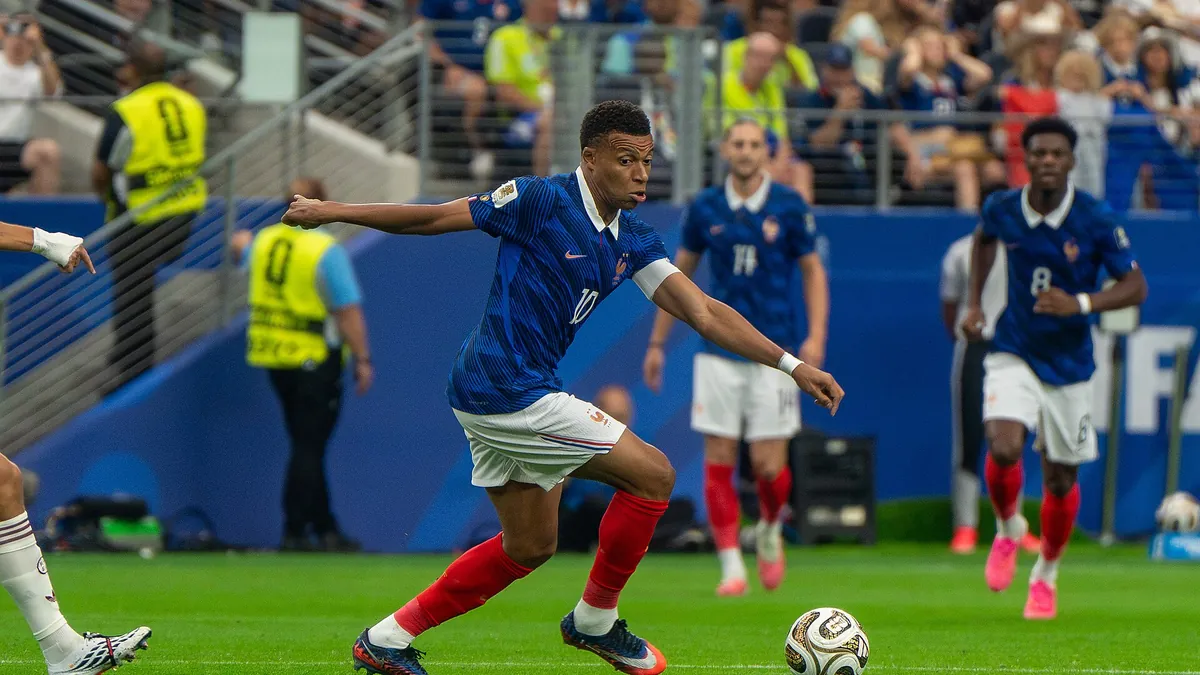
A forward of this profile usually plays on the left of a front three or as a central striker. Either way, the team around him would need to adapt.
This is a hypothetical exercise. No club has made an official offer and the player is under contract at Real Madrid, where he leads the La Liga scoring chart with 12 goals and two assists after ten rounds. But the rumours raise a fair tactical question: what would any club have to change to get the best out of him?
Two possible roles
The first option is the left side of a front three. From there the forward can receive the ball wide, run at a full-back and cut inside onto his right foot. It is the role in which he made his name, and it gives him space to attack at speed.
The second option is a central striker. Here he would play closer to goal, make runs in behind the last defender and be the reference point for the attack. This role reduces the amount of defensive running he has to do and keeps him in the areas where he scores most often.
| Role | Main strength | What the team needs |
|---|---|---|
| Left forward | Running at defenders from wide | An overlapping left-back and a striker who drops deep |
| Central striker | Runs in behind and finishing | Midfielders who can play early passes over the top |
Both roles have worked for him in the past. The choice would depend less on the player and more on who is already in the squad.
Who would lose out
Signing a forward at this level always means someone else plays less. If he went to the left, the current left winger would have to move to the right or to the bench. If he played centrally, the existing number nine would have to accept a reduced role or move wider.
That is the first tactical cost. The second is in midfield. A forward who prefers the ball played into space rather than to feet needs midfielders who look forward first. A side built on short passing and slow build-up would have to speed up its play to use him properly.
- One of the current wingers would likely lose his place
- The striker would have to change role or rotate
- Midfielders would need to play more vertical passes
- The left-back would have to choose between overlapping and staying back
How the style would change
We expect more direct play and fewer crosses, which suits clubs that defend deep and counter-attack.
A team built around this type of forward typically sees fewer crosses from wide areas and more passes into the channels. Possession numbers often drop slightly, because the aim is to reach the final third quickly rather than to keep the ball for long spells.
There is also a defensive side to consider. Forwards who stay high up the pitch after losing the ball leave more work for the midfield. Coaches usually handle this by asking the opposite winger to track back further, or by playing an extra holding midfielder. Either option changes the shape of the team without the ball, and it can take several weeks of training before it works smoothly in matches.
Which clubs would suit him best
Without naming clubs, the profile is clear. Teams that already defend in a compact block and break quickly would need the fewest changes. Sides that dominate possession against deep defences would get less out of his pace, because there would be little space behind the opposition to attack.
In the Champions League the picture is different. Against stronger opponents who press high, a forward who can turn a won ball into a chance within seconds is valuable to almost any side. That is one reason why players of this type attract interest from clubs with very different styles.
The cost is the final factor. A deal of this size would leave little room in the budget for other signings, so the rest of the squad would have to fit around one player for several seasons. Sporting directors weigh that carefully, especially at clubs that also need depth in defence.
Tactically, the move would make most sense for a club that already plays a direct, counter-attacking game. For a possession side it would mean rebuilding the attack around one player, which is a risk even with a forward of this quality. On current information, though, any change is unlikely before the summer.